Supporting balanced coexistence between livestock farmers and large predators

Theme(s)

Challenge

Duration

2024-2028

Locations

Suisse – Valais, Vaud et Neuchâtel

Project funding

Context


Since its natural return in 1995, the wolf population in Switzerland has grown significantly, rising from around ten individuals to nearly 320 in 2025. This has intensified conflicts with pastoralism, particularly due to damage caused during the summer grazing of herds on alpine pastures. At the same time, legislation has evolved toward more flexible regulation measures, including the authorization of preventive culling.

objectives


  • Reduce conflicts between pastoralism and large carnivores (mainly the wolf)
  • Raise awareness, inform, encourage reflection, and develop empathy in the classroom
  • Develop new applied conservation technologies

actions


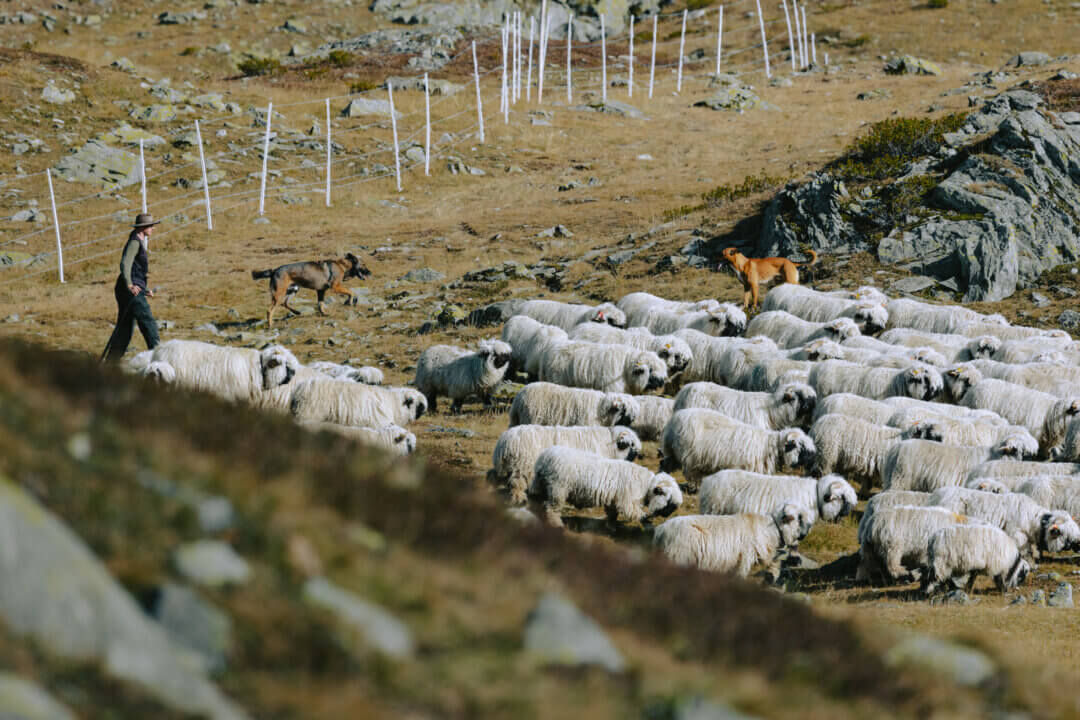
  • Herd monitoring (sheep and cows) and deterrence: through volunteers and civil service workers using professional equipment, at the request of farmers facing high wolf pressure
  • Awareness-raising: more than 20 four-period school workshops per year in 7H and 8H grade classes, covering coexistence with wildlife, the ecology of large carnivores, and how to use a shared territory
  • Science: development of a smart tag prototype

Contexte

Context


Since its natural return in 1995, the wolf population in Switzerland has grown significantly, rising from around ten individuals to nearly 320 in 2025. This has intensified conflicts with pastoralism, particularly due to damage caused during the summer grazing of herds on alpine pastures. At the same time, legislation has evolved toward more flexible regulation measures, including the authorization of preventive culling.

objectives


  • Reduce conflicts between pastoralism and large carnivores (mainly the wolf)
  • Raise awareness, inform, encourage reflection, and develop empathy in the classroom
  • Develop new applied conservation technologies

actions


  • Herd monitoring (sheep and cows) and deterrence: through volunteers and civil service workers using professional equipment, at the request of farmers facing high wolf pressure
  • Awareness-raising: more than 20 four-period school workshops per year in 7H and 8H grade classes, covering coexistence with wildlife, the ecology of large carnivores, and how to use a shared territory
  • Science: development of a smart tag prototype
© Fabian Leu
© Valérie Meizoz
© Fabian Leu
© Fabian Leu
© Fabian Leu
© Fabian Leu

Contexte

Context


Since its natural return in 1995, the wolf population in Switzerland has grown significantly, rising from around ten individuals to nearly 320 in 2025. This has intensified conflicts with pastoralism, particularly due to damage caused during the summer grazing of herds on alpine pastures. At the same time, legislation has evolved toward more flexible regulation measures, including the authorization of preventive culling.

objectives


  • Reduce conflicts between pastoralism and large carnivores (mainly the wolf)
  • Raise awareness, inform, encourage reflection, and develop empathy in the classroom
  • Develop new applied conservation technologies

actions


  • Herd monitoring (sheep and cows) and deterrence: through volunteers and civil service workers using professional equipment, at the request of farmers facing high wolf pressure
  • Awareness-raising: more than 20 four-period school workshops per year in 7H and 8H grade classes, covering coexistence with wildlife, the ecology of large carnivores, and how to use a shared territory
  • Science: development of a smart tag prototype

Partner

Association OPPAL

OPPAL défend la biodiversité et favorise la mise en place d’une cohabitation pacifique entre faune sauvage et activités humaines.
Le travail de l’association porte sur des actions sur le terrain, des activités de sensibilisation et la participation à des recherches scientifiques.