The reusable bottle bringing winegrowers and wine lovers together

Theme(s)

Challenge

Partners

Duration

2026

Locations

Switzerland

Project funding

Context


Glass bottles account for 40% of a winery’s carbon footprint. Although Switzerland recycles 97% of its glass, the process remains highly energy-intensive, requiring glass to be melted at 1,500°C for 24 hours. Recycling saves raw materials, but not energy. Sand, the main raw material used to make glass, is becoming increasingly scarce. Reusing bottles could reduce bottle-related emissions by up to 85%.

Objectives


  • Reduce the environmental impact of the wine industry
  • Standardize bottles to facilitate their reuse
  • Put 600,000 bottles into circulation in 2026 and 1 million in 2027
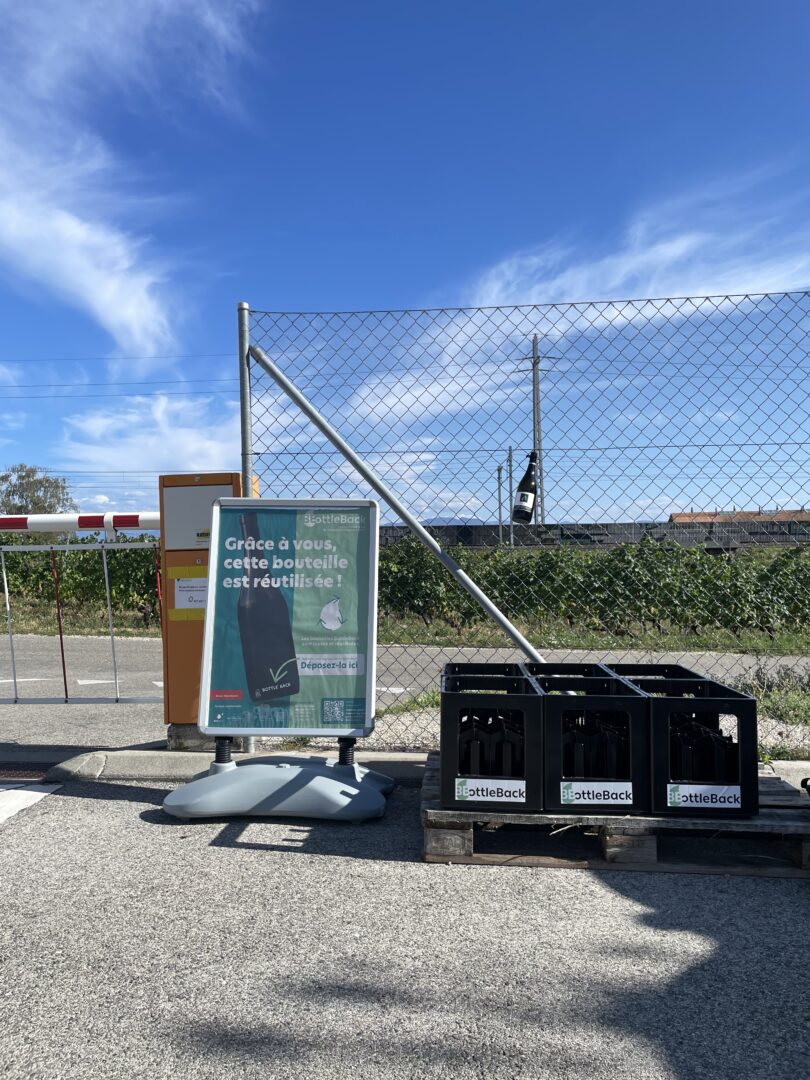
  • Create a nationwide network for bottle collection, washing and redistribution
  • Engage winegrowers, local authorities and consumers

Actions


  • Reduce the environmental impact of the wine industry
  • Standardize bottles to facilitate their reuse
  • Put 600,000 bottles into circulation in 2026 and 1 million in 2027
  • Create a nationwide network for bottle collection, washing and redistribution
  • Engage winegrowers, local authorities and consumers

Contexte

Context


Glass bottles account for 40% of a winery’s carbon footprint. Although Switzerland recycles 97% of its glass, the process remains highly energy-intensive, requiring glass to be melted at 1,500°C for 24 hours. Recycling saves raw materials, but not energy. Sand, the main raw material used to make glass, is becoming increasingly scarce. Reusing bottles could reduce bottle-related emissions by up to 85%.

Objectives


  • Reduce the environmental impact of the wine industry
  • Standardize bottles to facilitate their reuse
  • Put 600,000 bottles into circulation in 2026 and 1 million in 2027
  • Create a nationwide network for bottle collection, washing and redistribution
  • Engage winegrowers, local authorities and consumers

Actions


  • Reduce the environmental impact of the wine industry
  • Standardize bottles to facilitate their reuse
  • Put 600,000 bottles into circulation in 2026 and 1 million in 2027
  • Create a nationwide network for bottle collection, washing and redistribution
  • Engage winegrowers, local authorities and consumers
© BottleBack
© BottleBack

Contexte

Context


Glass bottles account for 40% of a winery’s carbon footprint. Although Switzerland recycles 97% of its glass, the process remains highly energy-intensive, requiring glass to be melted at 1,500°C for 24 hours. Recycling saves raw materials, but not energy. Sand, the main raw material used to make glass, is becoming increasingly scarce. Reusing bottles could reduce bottle-related emissions by up to 85%.

Objectives


  • Reduce the environmental impact of the wine industry
  • Standardize bottles to facilitate their reuse
  • Put 600,000 bottles into circulation in 2026 and 1 million in 2027
  • Create a nationwide network for bottle collection, washing and redistribution
  • Engage winegrowers, local authorities and consumers

Actions


  • Reduce the environmental impact of the wine industry
  • Standardize bottles to facilitate their reuse
  • Put 600,000 bottles into circulation in 2026 and 1 million in 2027
  • Create a nationwide network for bottle collection, washing and redistribution
  • Engage winegrowers, local authorities and consumers

Partner

BottleBack

BottleBack est une association à but non lucratif qui propose aux vignerons et vigneronnes et aux amateurs de vin une bouteille réemployable. Une démarche d’économie circulaire qui permet de faire un geste pour la planète, tout en simplifiant le quotidien des consommateurs.